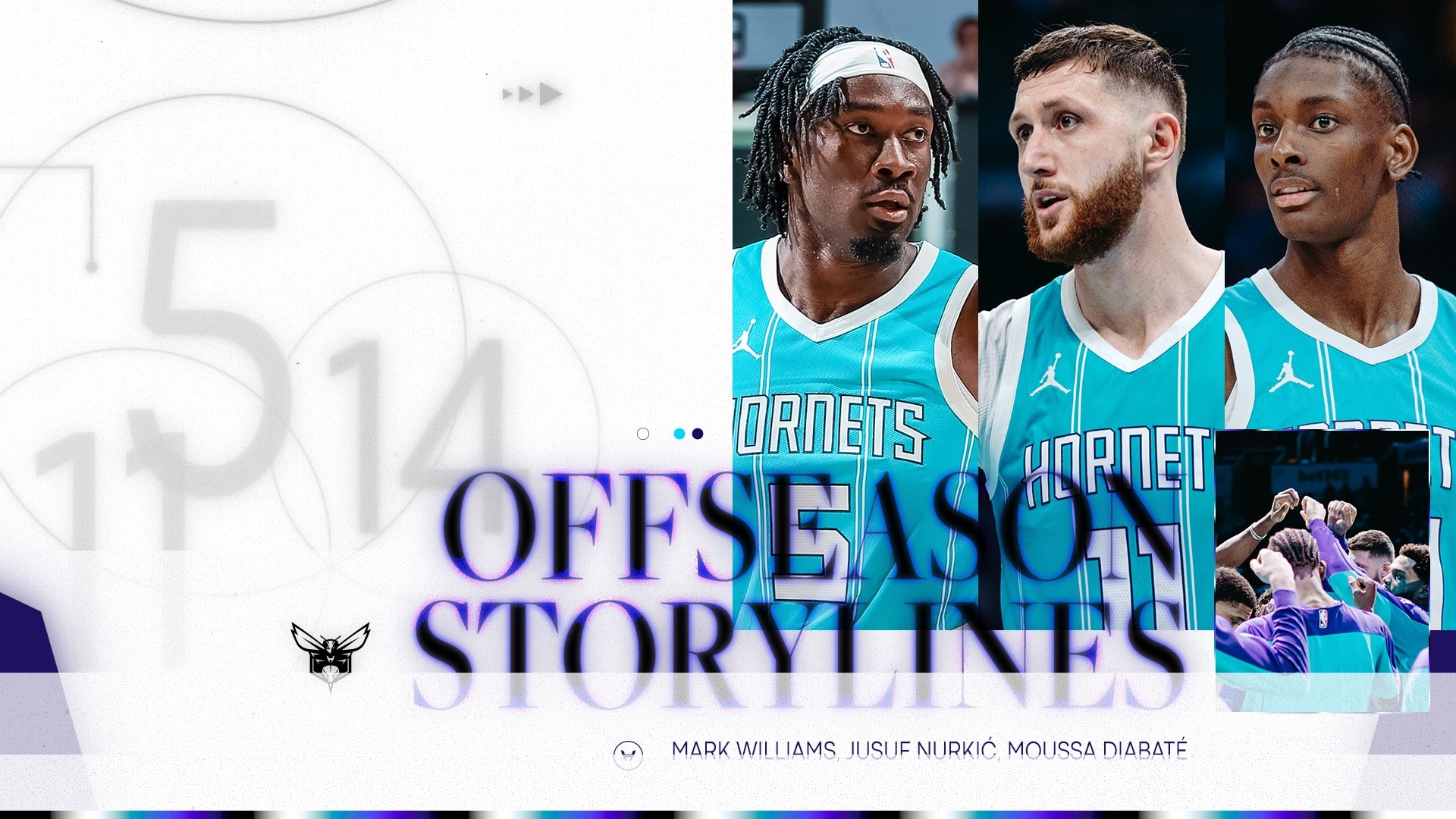
At the start of the 2024-25 NBA season, three Charlotte Hornets centers were in entirely different situations compared to where they finished the campaign. Mark Williams was rehabbing an offseason foot injury, Jusuf Nurkić played for the Phoenix Suns and Moussa Diabaté had his sights set on a new opportunity after two years with the LA Clippers.
Each of these players compiled productive and at times, complementary stretches that has the team’s frontcourt rotation in an encouraging place heading into the summer. Starting with Williams, he didn’t make his season debut until Dec. 3, which was almost a full year removed from his most recent appearance. While navigating a temporary minutes restriction and sitting out back-to-backs, Williams put up career highs in points (15.3 on 60.4% shooting), rebounds (10.2), assists (2.5), blocks (1.2) and double-doubles (21) over 44 outings, 41 being starts.
“Health-wise, I’m in a great place,” said Williams during exit interviews. “Obviously, I finished the year. Besides the start of the season, I was playing every game besides the back-to-backs. [The foot] feels good. I’m fine – no issues there. After the All-Star Break, I was able to be in more and more of a rhythm and have some pretty good games at the end of the year.”
From Feb. 25 to April 11, Williams looked much more like the player he was prior to the back injury that sidelined him for most of last season. Across these 19 games, he averaged 15.4 points on 64.2% shooting, 11.2 rebounds, 2.6 assists and 1.4 blocks in 28.7 minutes. Amongst NBA players that defended at least 70 total shots within six feet of the basket in March, Williams ranked tied for fourth in opposing field-goal percentage (50.0%; 36-of-72), which was a substantial improvement from his first 26 appearances (67.9%; 112-of-165).
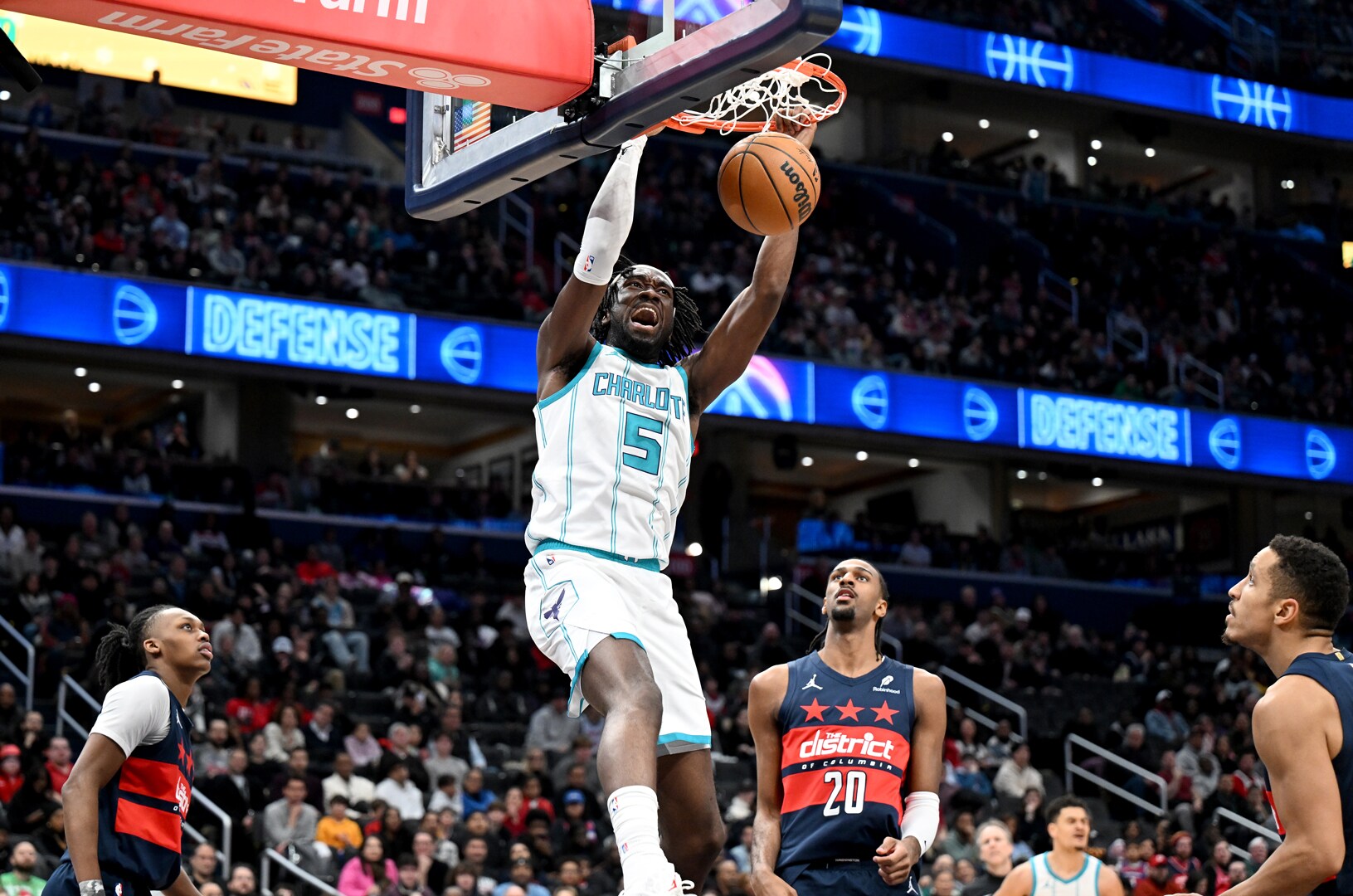
“I think statistically, [my season] speaks for itself, but at the same time, there’s stuff I could have done better offensively and defensively,” added Williams. “They told me in the month of March, like my rim field-goal percentage allowed was like ninety-something percentile. That wasn’t the case when I was first getting back and trusting my body, trusting unexpected contact. With time, I was able to get better throughout the year. Having this summer to improve on that, improve my body, improve my strength, agility, mobility, offensive expansion, defensive versatility, you name it, all those things will allow for growth and success for the team.”
“[Mark’s] in the right spot a lot of times,” explained Hornets Head Coach Charles Lee. “He’s just got to be a little quicker to get off the floor. He does a great job of understanding players’ tendencies, and then when they drive, he’s got to be able to absorb that contact a little bit better and not give ground. Once he has a great summer this year and he’s lifted his legs, gotten a little stronger, a little bit more confident in his movements, we’re going to see him take off in a lot of different areas, especially defensively. There were some big-time blocks that he had, and then there were some where he’s almost there and going to get it. Offensively, we got to see a lot of what he can do. In the half-roll, he was great and can finish. Again, with added strength and conditioning to be able to play both sides of the floor, I think some of those finishes through contact are going to be a little bit easier next year, more and-ones in there. He’s a heck of a passer. We use him in some of the ATO’s (after timeouts) to throw lobs to Miles [Bridges], or you hit him in the seam and he’s hitting [passes to] corner threes.”
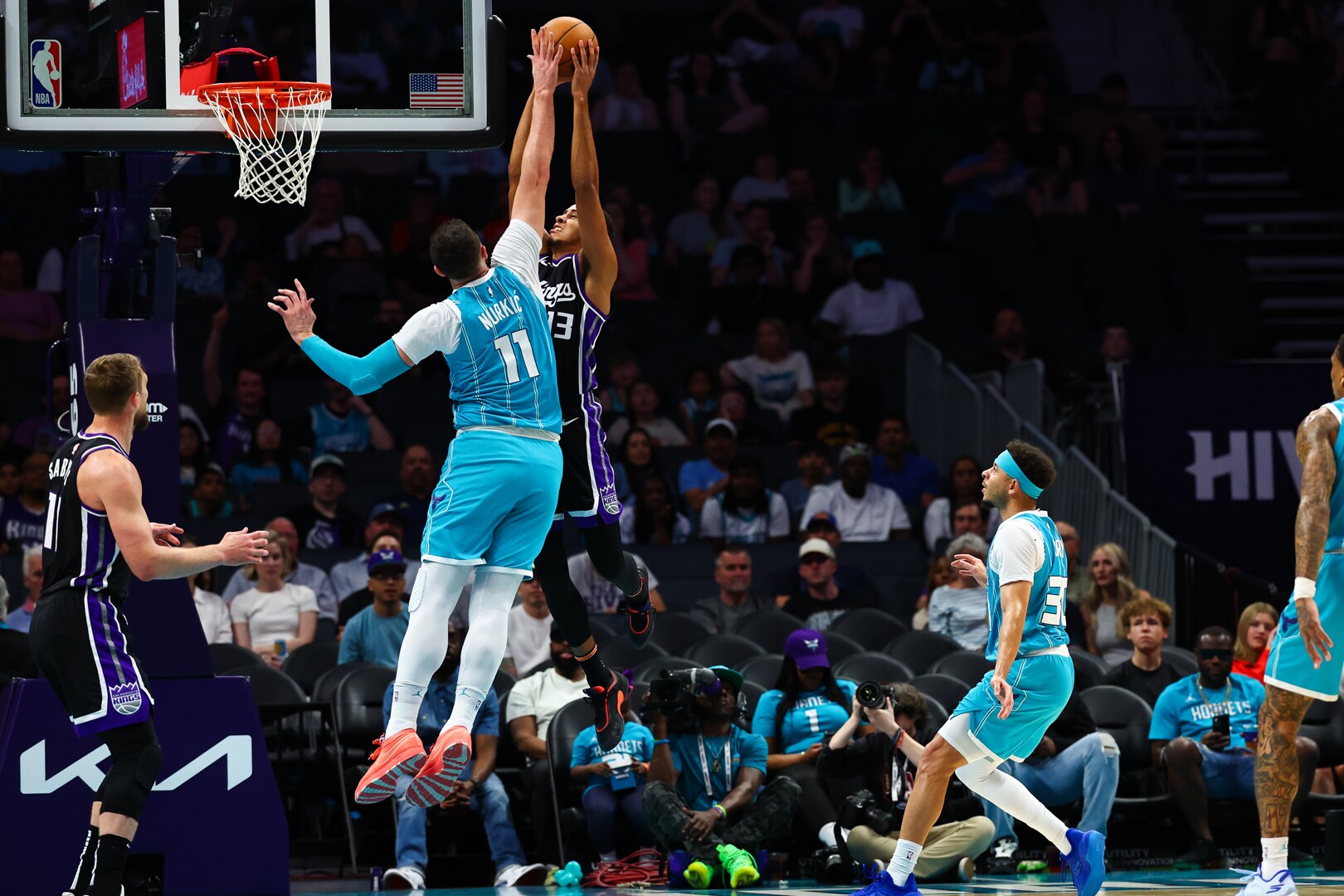
One development that Williams benefited from was the addition of Nurkić, who was acquired by the Hornets shortly before the trade deadline on Feb. 6. Having fallen out of Phoenix’s rotation, the seven-foot Bosnian provided additional physicality, post-up play, floor-spacing and playmaking at the center spot. Across 26 games and nine starts, Nurkić averaged 9.2 points on 49.7% shooting, 6.5 rebounds and 2.6 assists. Though he only drained two of his first 21 3-point attempts (9.5%) as a Hornet, Nurkić eventually found his stroke and finished 11-of-25 (44.0%).
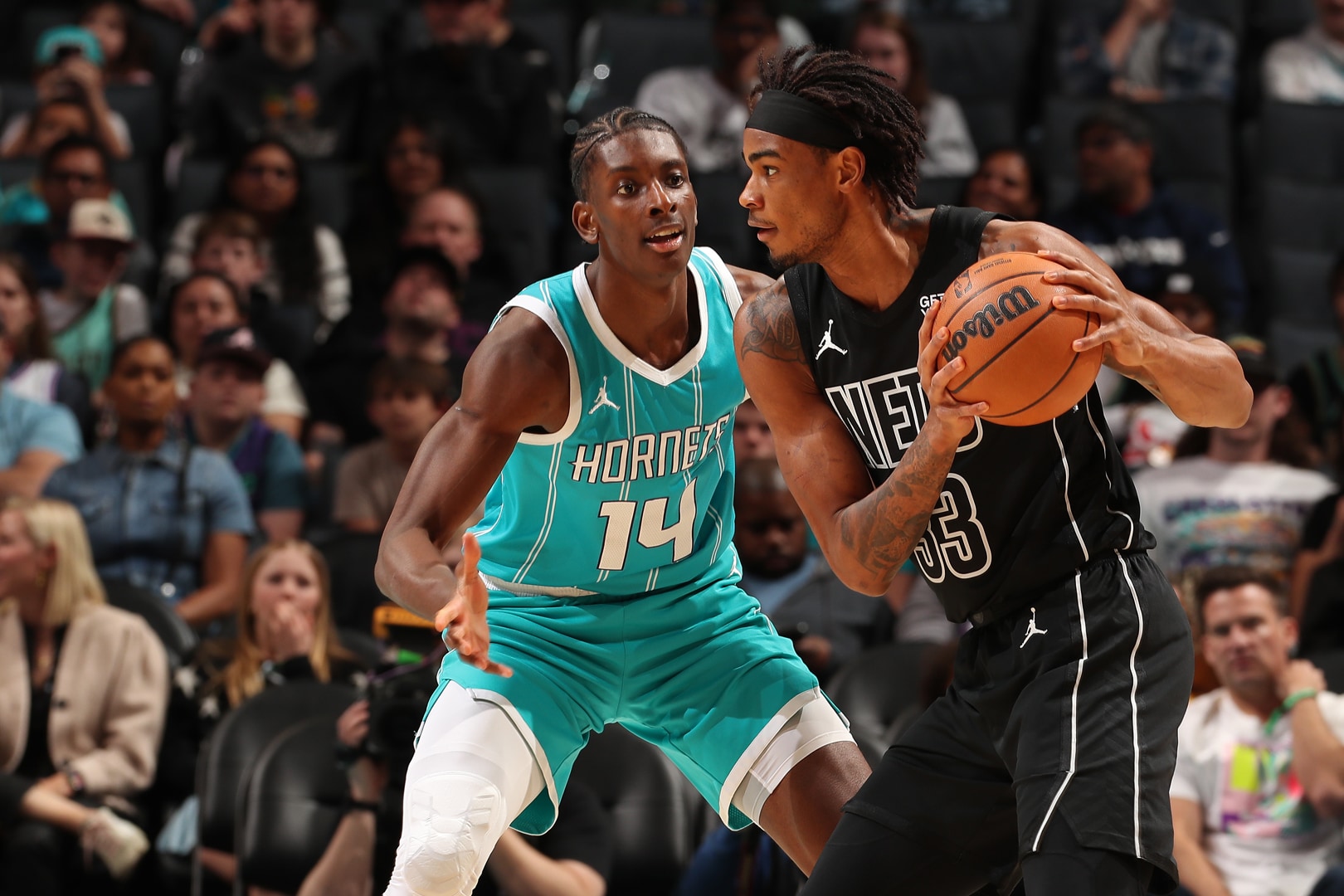
Diabaté, who had his two-way contract converted to a standard deal on Feb. 8, appeared in a team-high 71 games (eight starts) this season, and posted career bests in points (5.7), rebounds (6.2), steals (0.6), blocks (0.6), field-goal percentage (59.6%) and double-doubles (7). He also ranked 16th in the NBA in offensive rebounding (2.6) and 12th in rebounds per 36 minutes (12.7).
“I got a great opportunity to play and was able to maximize it,” said Diabaté. “Being able to adapt is something I’m definitely going to have to keep on getting better at. The coaches want to make sure I understand to stick to my strengths. I think the main thing for me is being able to be a mismatch overall, finishing on smaller guys in the paint, stepping out and driving bigger guys. Shooting is going to come, but we’re not too pressed on that. See what I could have done better and also what I’m already doing well and become elite at it. Stick to your strengths and as time goes on, just keep on growing around it.”
While more than 90 percent of Diabaté’s playing time came at center, he served as a defensive connector on the perimeter and regularly switched onto smaller players. Having Nurkić in the rotation also allowed the Hornets to occasionally slide the Frenchman over to the four and experiment with some double-big lineups over the final few weeks of the season. In the nine games and 46 minutes that these two shared the court together, the Hornets logged a net rating of +18.9. Lineups pairing Williams with Diabaté (nine games, 48 minutes) and Nurkić (two games, seven minutes) got some run, but weren’t nearly as successful, at least statistically.
“All three are just really good players,” said Lee before the team’s home game on March 25. “They all give our team something different. When you walk out of the arena and didn’t play one of them, you’re like, ‘Dang, I wish I could have thrown him out there.’ They can all make a positive impact, whether defensively or offensively. What I’ve seen so far of the two-big lineups, I think defensively, it’s added just a little bit more beef, the ability to protect the paint a little bit better, rebound a little bit better. I think offensively, we’ve run into some moments where because we haven’t done it as much, spacing sometimes is an issue. But to their credit, they’ve figured it out really well. Giving them that mindset of we can still dominate the paint, we can do some old-school Spurs [Tiago] Splitter-[Tim] Duncan two-bigs working the dunker and adjusting on penetration and stuff. I look forward to working through it and getting a bigger sample size.”
There was a lot to like and build on from each of Mark Williams, Jusuf Nurkić and Moussa Diabaté this past season, both from an individual and collective standpoint. The Hornets’ frontcourt rotation isn’t a finished product but has plenty of workable elements for the future.