
With training camp right around the corner, it’s time for us to break down the Celtics’ roster to give you an idea of what the team’s depth chart will look like for the 2026-27 season.
In years past, we’ve divided the roster into three positional categories: ball handlers, wings, and bigs. This year, we’re simplifying things a bit by separating the group into two categories: backcourt and frontcourt.
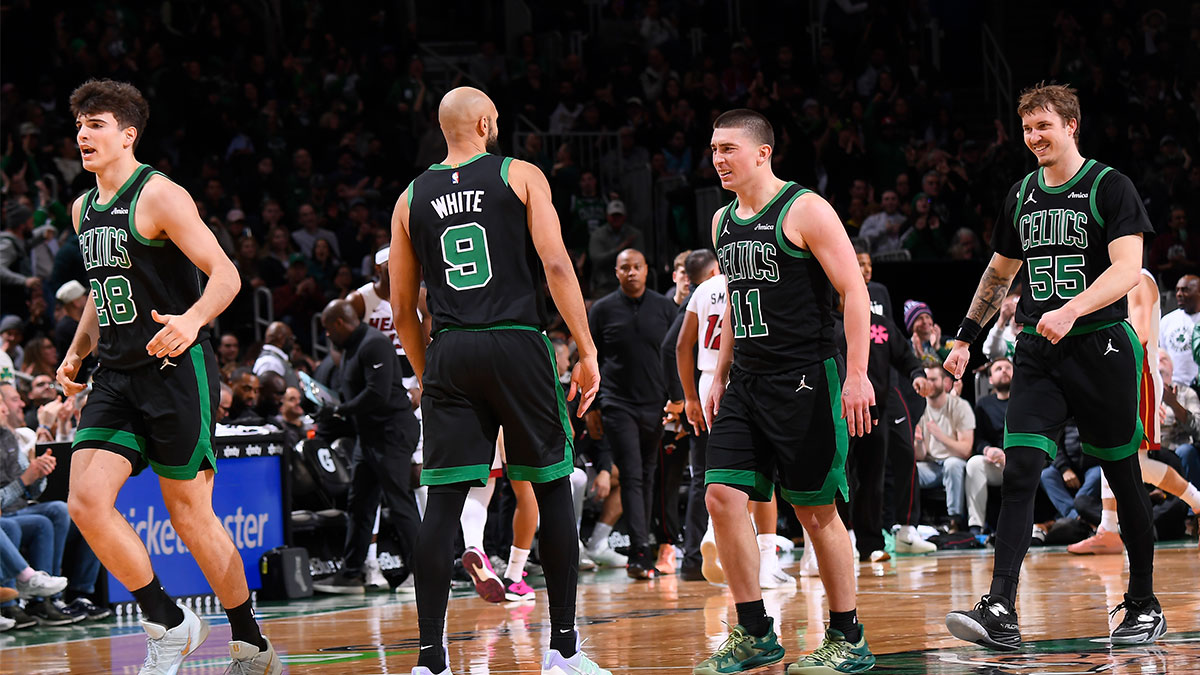
We’ll begin with the backcourt, which features a blend of familiar faces and one of the most experienced newcomers in the NBA. Derrick White and Payton Pritchard return to lead the group, while Mike Conley brings 19 seasons of experience to Boston. Baylor Scheierman, Hugo Gonzalez, and Ron Harper Jr. round out a versatile collection of young guards and wings.
We'll round out the roster with the frontcourt next week, but for now, here are Boston’s six backcourt players, listed in order of minutes played per game last season:
Derrick White
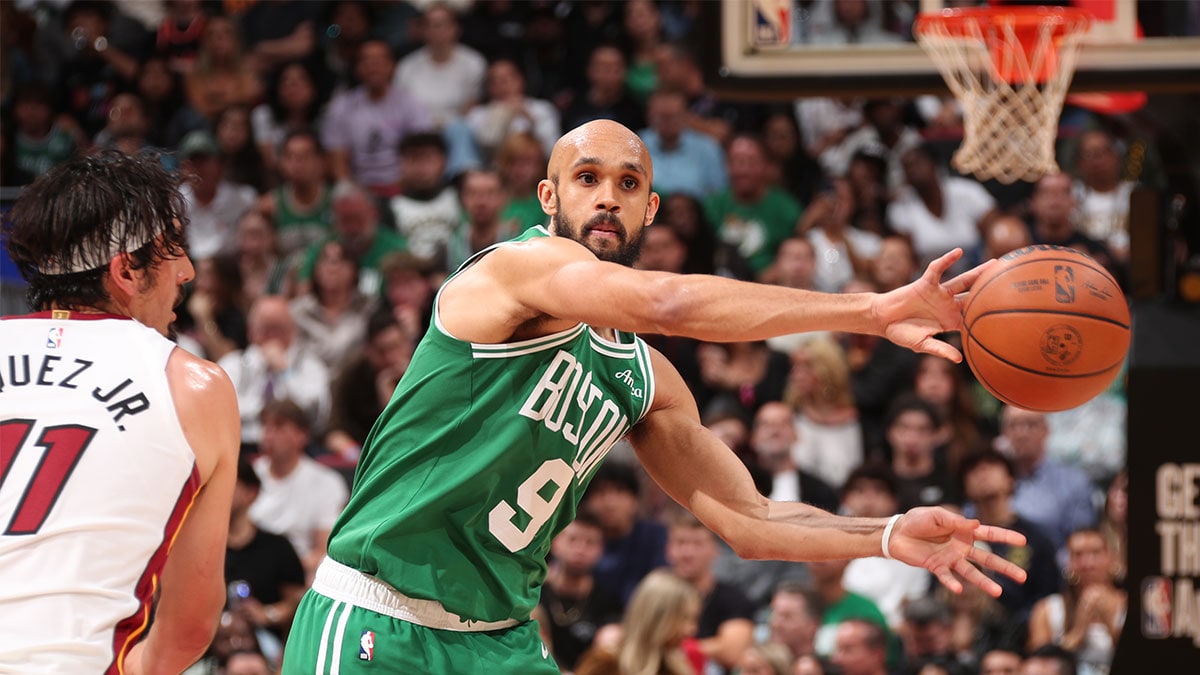
Derrick White’s role continued to grow last season, and so did his production. The veteran guard averaged a career-high 16.5 points to go along with 5.4 assists and 4.4 rebounds across 77 games. He also established career-highs on the defensive end with 1.3 blocks and 1.1 steals per game, becoming the first Celtic since Kevin Garnett in 2007-08 to record at least 75 blocks and 75 steals in a season.
Those efforts resulted in some well-deserved hardware. White earned his first All-Defensive First Team selection, was named Eastern Conference Defensive Player of the Month for March, and received the NBA Sportsmanship Award.
Now entering his fifth full season in Boston, White remains one of the Celtics’ most reliable two-way players and one of their primary offensive initiators. After taking on an increased workload last season, he’ll look to carry that momentum into Year 10 of his NBA career.
Payton Pritchard
After earning Sixth Man of the Year honors in 2024-25, Payton Pritchard continued to prove that he can handle an expanded role. Pritchard averaged career highs of 17.0 points, 5.2 assists, and 3.9 rebounds per game last season while being one of the league’s most efficient scorers both inside the paint and beyond the 3-point arc.
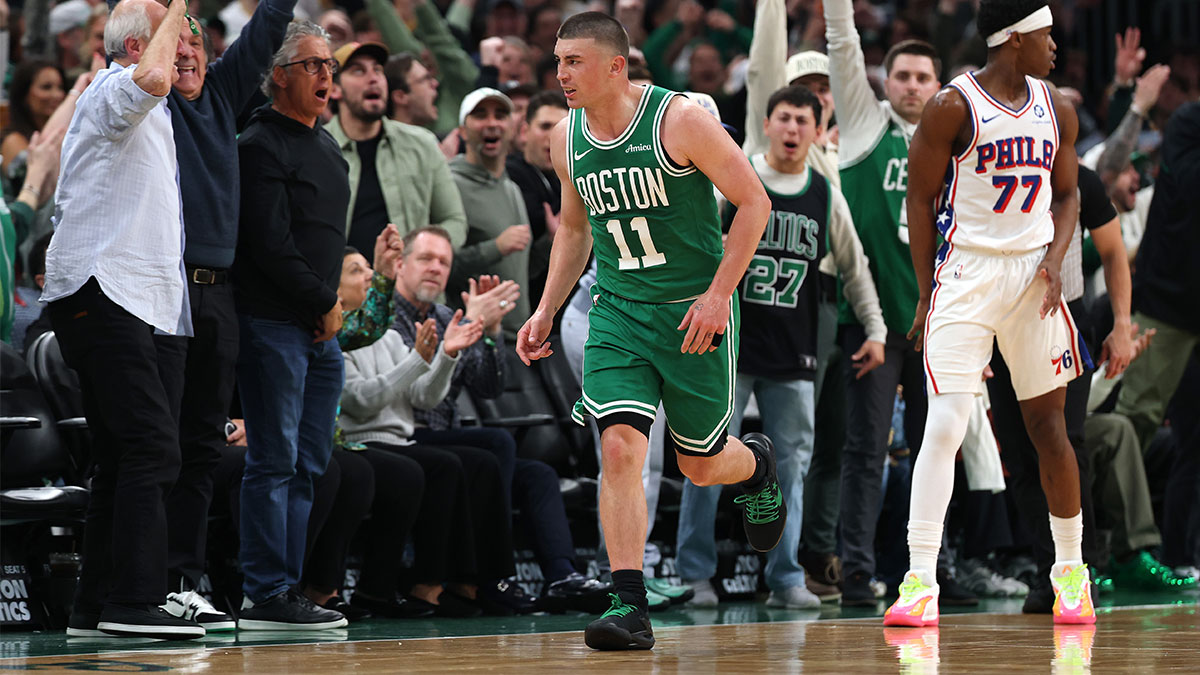
There were plenty of explosive performances along the way. Pritchard poured in a season-high 42 points at Cleveland, scored 36 against Atlanta, and carried that production into the postseason, highlighted by a 32-point performance during Boston’s Game 4 win over Philadelphia.
Pritchard has carved out a larger role in each of his six NBA seasons, developing from a sparkplug reserve into one of Boston’s most important offensive weapons. Whether he’s creating for himself or others, he’ll once again be counted on to supply plenty of punch to the Celtics’ backcourt.
Mike Conley
No player on Boston’s roster enters this season with more NBA experience than Mike Conley.
The 38-year-old guard is heading into his 20th season after spending the previous three-plus campaigns with Minnesota. His role diminished last season, but he still averaged 4.5 points, 2.9 assists, and 1.7 rebounds while providing the Timberwolves with a steady veteran presence in the backcourt.
Conley’s resume speaks for itself. The former All-Star and All-Defensive selection has appeared in more than 1,100 regular-season games during a career that has included stops in Memphis, Utah, and Minnesota. He’ll now play in the Eastern Conference for the first time after signing with Boston over the summer.
Conley won’t be asked to carry the same workload he did earlier in his career, but his experience, decision-making, and leadership should be valuable to a Celtics team that has a lot of youth in its backcourt. And after 19 seasons without a title, he’ll arrive in Boston with plenty of motivation to help the C’s make another run.
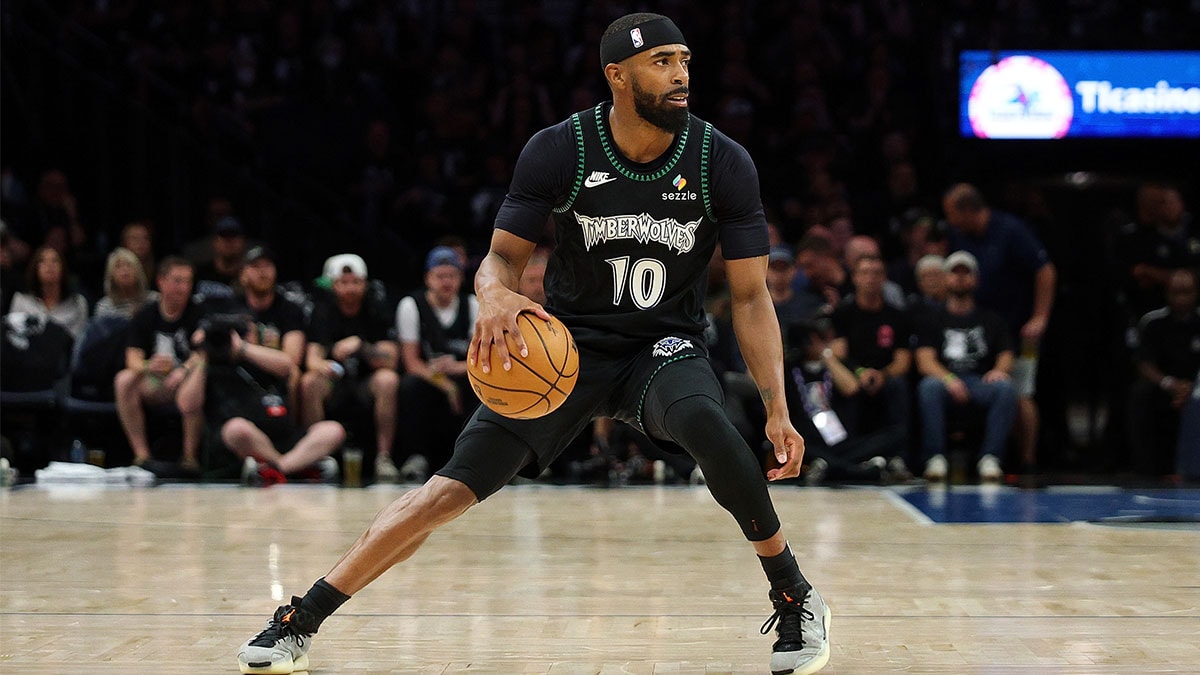
Baylor Scheierman
Baylor Scheierman took a significant step forward during his sophomore season, earning a much larger role after spending most of his rookie campaign in and out of the rotation.
The 6-foot-6 guard appeared in 77 games and made 20 starts while averaging 5.0 points, 3.1 rebounds, and 1.4 assists in 16.8 minutes per game. He shot 39.9 percent from 3-point range, providing Boston with floor spacing and rebounding from the perimeter.
Scheierman’s versatility helped him earn opportunities throughout the season, especially after the All-Star break. He scored in double figures 17 times, logged four double-doubles, and showed that he could impact games even when his shot wasn’t falling, particularly with his activity on the glass.
After making a sizable jump from Year 1 to Year 2, Scheierman will look to take another step forward this season. His combination of strength, shooting, rebounding, and playmaking gives Joe Mazzulla another versatile option to plug into a variety of lineups.
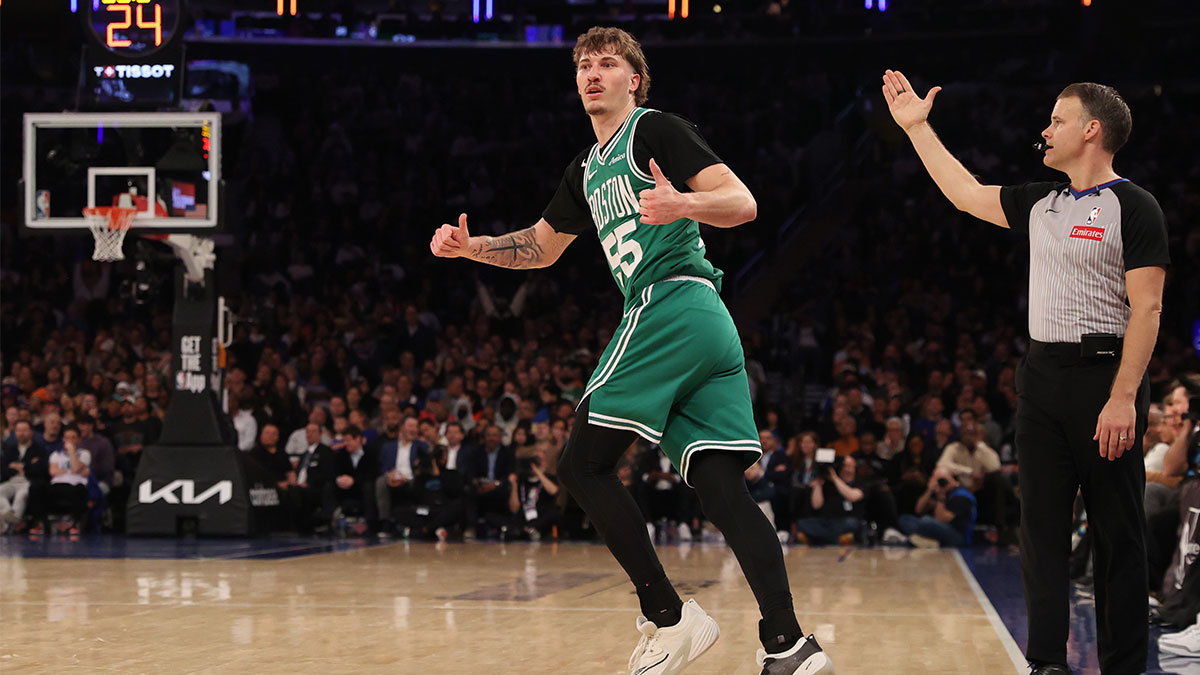
Hugo Gonzalez
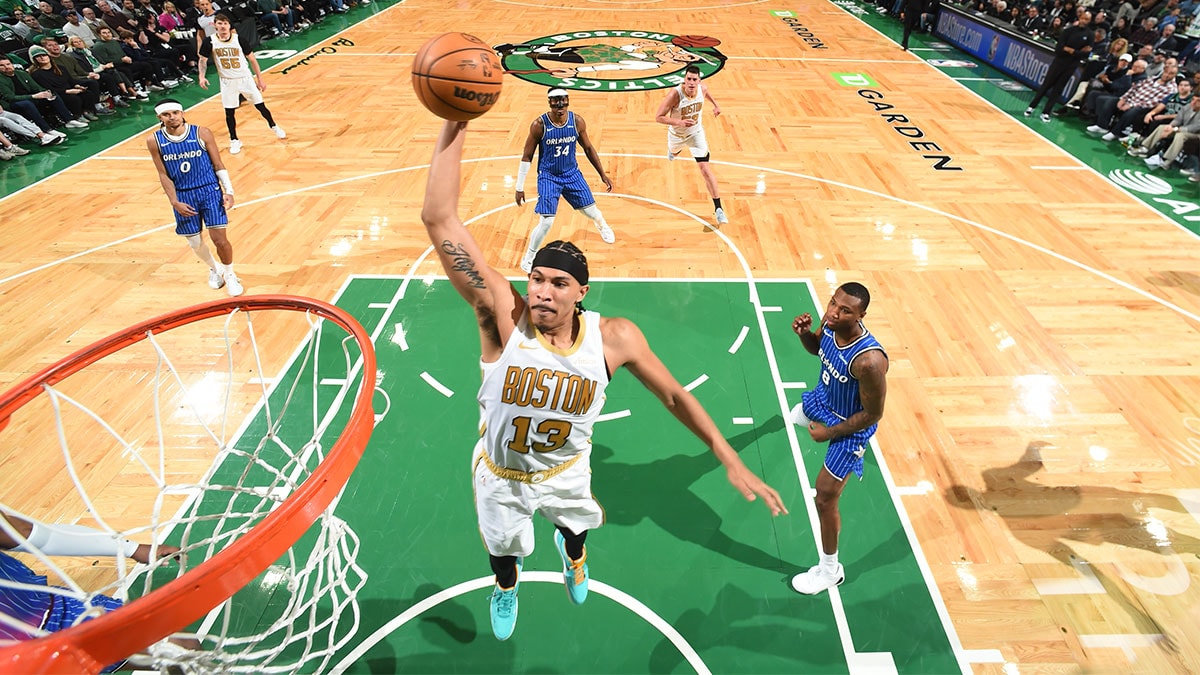
Hugo Gonzalez entered the NBA last season as one of the youngest players in the league, and the 20-year-old showed flashes of why Boston selected him with the 28th overall pick in the 2025 NBA Draft. He's also somewhat of a tweener in our Roster Breakdown, because his ability to defend any position could allow him to slide into the frontcourt – as you can see in the header image for this article – when Boston turns to smaller lineups.
The Spanish guard/forward averaged 3.9 points and 3.3 rebounds per game during his rookie campaign, but his impact wasn’t always reflected in the box score. At 6-foot-6, Gonzalez brought size, physicality, energy, and defensive versatility to the perimeter while gaining valuable experience during his first season in the NBA.
He also showed glimpses of his all-around potential when given extended opportunities. That included an 18-point, 16-rebound performance at Milwaukee late in the season, displaying the type of versatility that made him such an intriguing prospect coming out of Real Madrid.
With a full NBA season under his belt, Gonzalez will look to build upon that foundation in Year 2. He’s still one of the youngest players on the roster, so there is plenty of room for growth as he continues to develop his offensive game while leaning on the defensive energy that helped him earn minutes as a rookie.
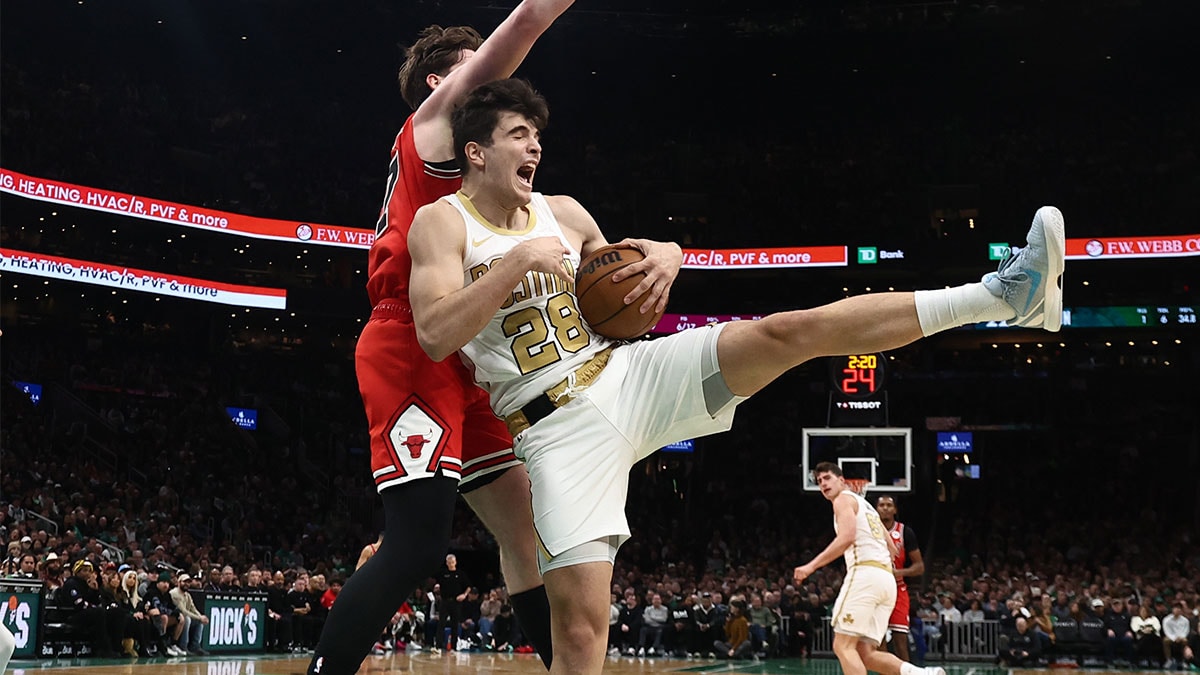
Ron Harper Jr.
Persistence paid off for Ron Harper Jr. last season, as he worked his way from the G League into Boston’s rotation. Harper spent significant time with the Maine Celtics, where he averaged 25.4 points, 5.1 rebounds, and 3.6 assists per game, before making the most of his opportunities with Boston. He averaged 4.2 points and 1.7 rebounds at the NBA level and stepped into the starting lineup a few times late in the regular season, as well as a Game 7 start against Philadelphia.
This summer, Harper’s perseverance was rewarded with a three-year deal to remain in Boston. Now armed with more stability and familiarity with the Celtics’ system, he’ll look to continue carving out a role with his physicality, shooting, and ability to contribute in multiple areas.