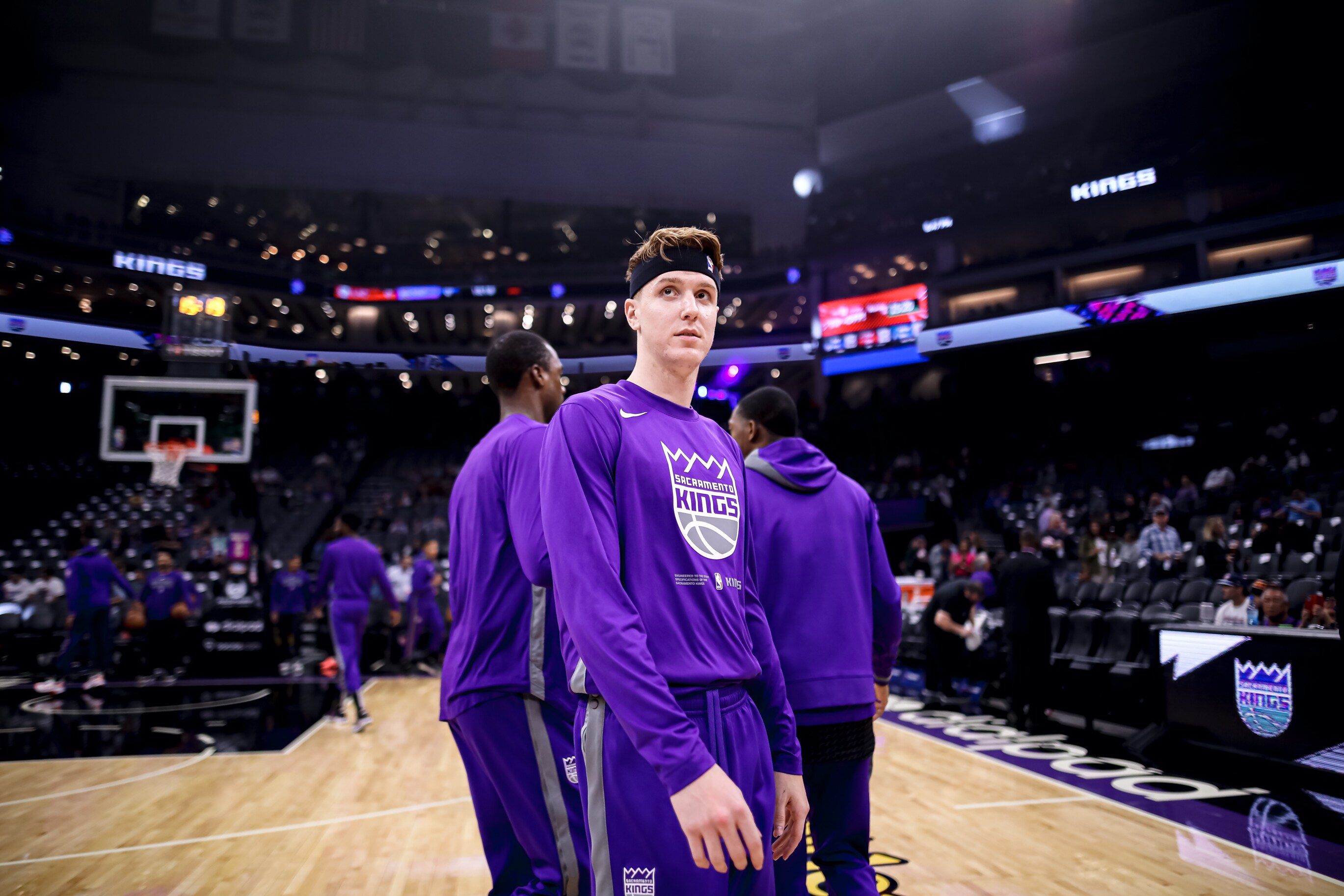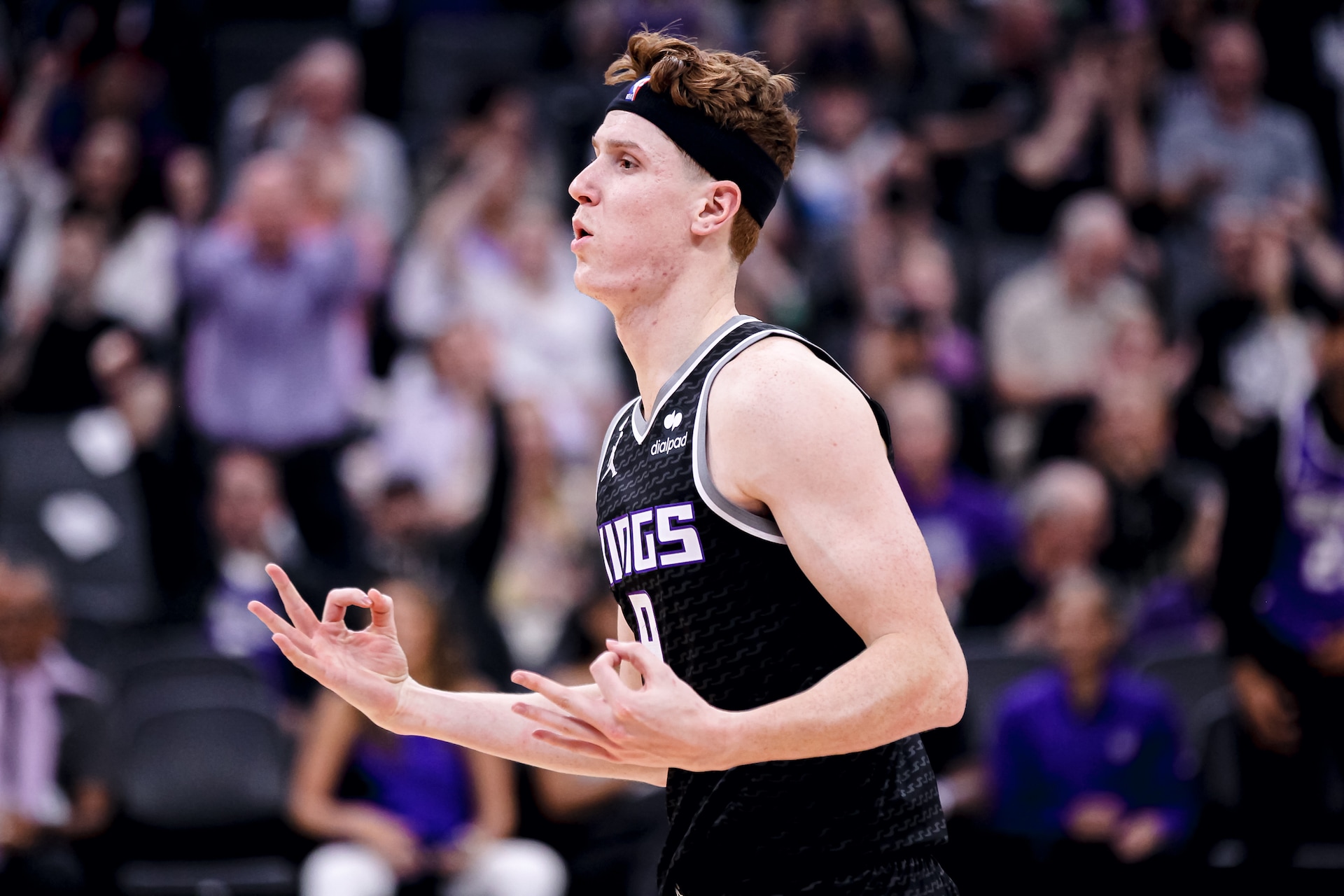
Once perceived as strictly an outside shooter, Sacramento’s No. 9 has thrived as a diverse bucket-getter and underrated playmaker.
Not long ago, when word was he was a threat off the catch but less so off the dribble, Kevin Huerter would surprise a defender who took him too lightly.
Because of his size and shooting range, the Clifton, N.Y. native was often compared – lazily so, he says – to Kyle Korver, a lights-out three-point specialist who primarily sprinted around screens and hoisted long-distance jumpers. And because he flew under the radar nationally during his two seasons at Maryland before an impressive showing at the pre-Draft combine, a long line of NBA counterparts underestimated Huerter and lived with regret.
A behind-his-back dribble, a between-his-legs crossover, an unexpected change of direction, would shake an unsuspecting opponent off balance, leaving the 6-foot-7 wing just enough time to launch a sudden stepback three or the space to put the ball on the floor and flick in a floater.
“I feel like my first couple of years, there weren’t guys who really knew my game,” Huerter said. “They probably saw me as a guy who stands in the corner and shoots.
“Guys like [Korver and JJ Redick] are unbelievable, the way they can spread off screens and make shots. I just think our games are a little bit different. I think I’m a guy who can get into the paint, make plays and obviously distribute and make plays for other guys, too.”
These days, the scouting report on Sacramento’s second-leading scorer is far more robust, accounting for the many ways he affects each play. He’s a shooter, of course, an elite marksman at that. His three-point percentage of .507 ranks ninth in the league among qualified players, and no one with at least 50 attempts from deep has been more accurate.
But Huerter is certainly more than just a standstill shooter, more than just a weak-side floor spacer.
He’s taking 65 percent of his field goals from behind the arc and has been assisted on 86 percent of his makes, yet rather than only spotting up, he’s nailing shots on the move, running the wing in transition, getting free off pindown and stagger screens and snagging dribble hand-offs. Huerter has converted on 14 of 24 pull-up triples (58.3 percent), far and away the highest rate of any player with as many attempts.
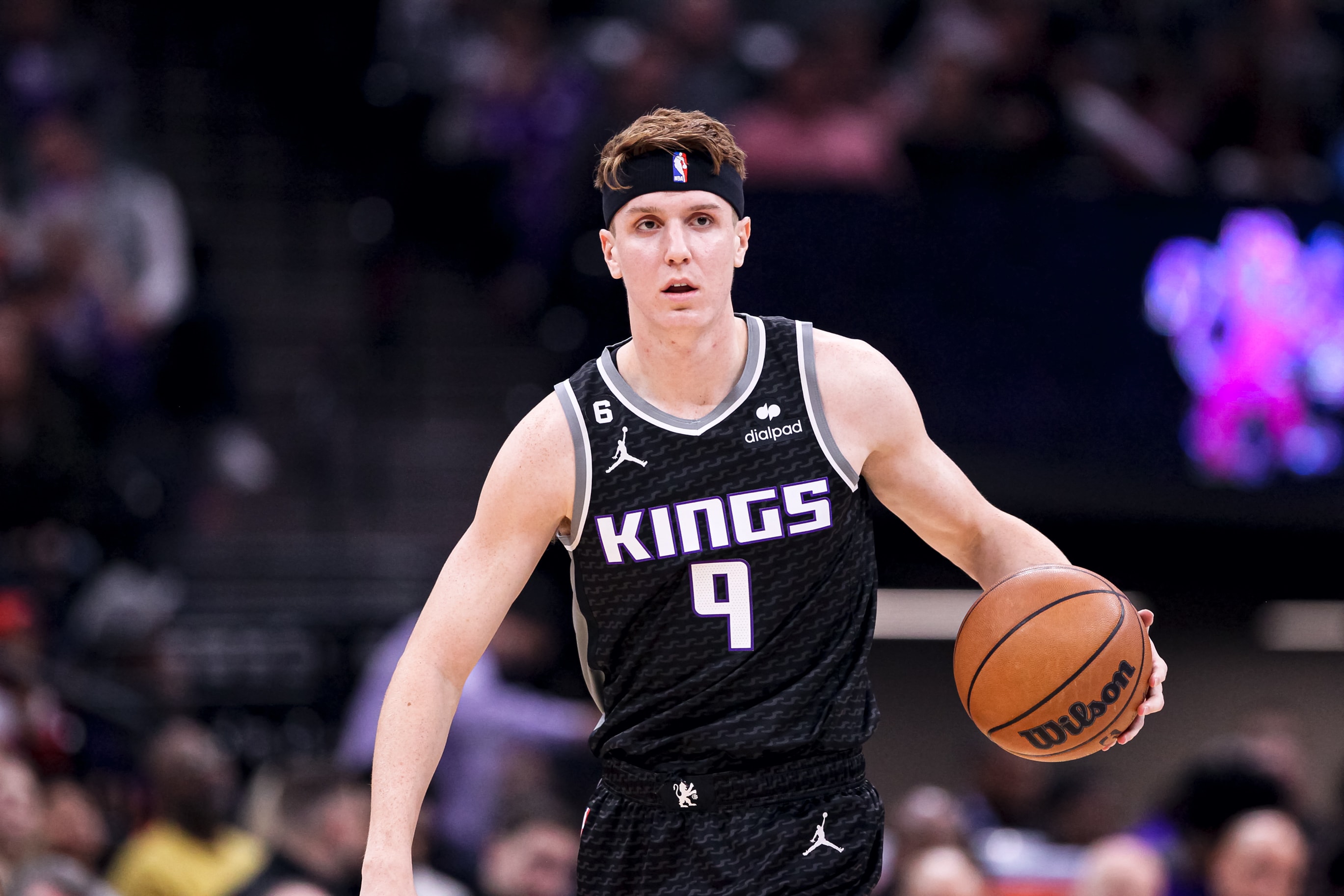
When defenders have closed out on him to dissuade his lethal three-pointer, the Maryland product has operated effectively from the middle of the floor, handling comfortably in traffic and letting it fly from mid-range before they can recover. Last year, Huerter drilled 46.6 percent from that area of floor, a tick behind Chicago’s DeMar DeRozan (47 percent).
An instinctive cutter to the basket, Huerter, who spent the summer building strength and flexibility,
has converted on 9 of 13 shots in the restricted area so far this season. Time and again, he’s used his sharpshooting reputation to free himself near the rim when reading that his opponent is overplaying the probability that No. 9 will pop out to the perimeter.
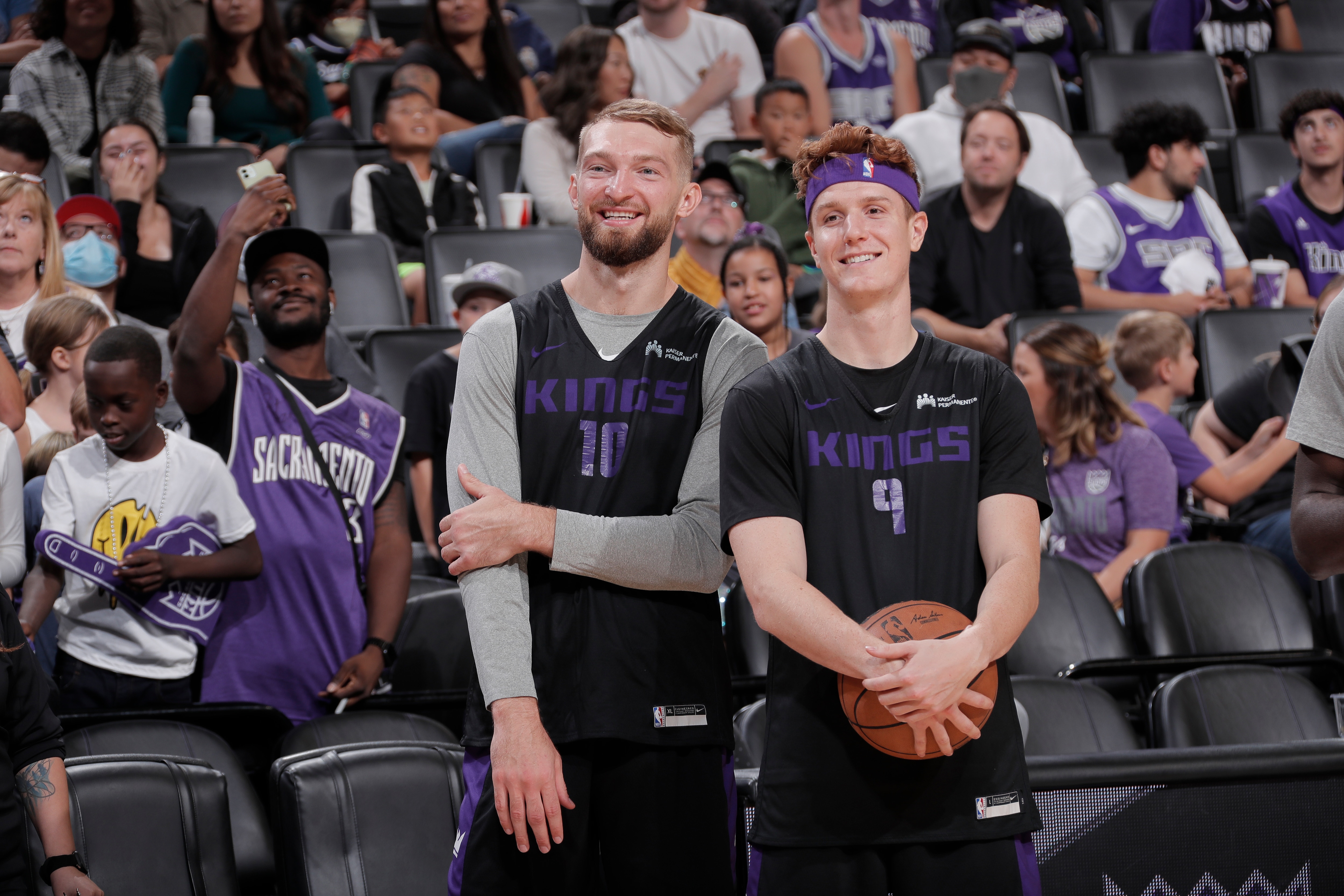
“He’s amazing,” said Domantas Sabonis, a slick-passing center who’s already started improvising with Huerter. “He opens the court for everybody. Defenses want to not help off him, he attracts a lot of attention. My job is to get him open, get him easy looks to get going.”
With Huerter on the floor, the Kings have been 18.5 points better per 100 possessions compared to when he’s sat on the bench, per Cleaning the Glass. It’s a small sample size, but to put that differential in context, the Kings have played at the level of a 50-win team when he’s been in the game, a staggering 39 wins better than how they’ve fared without him.
Huerter's smooth stroke, quick but unhurried, is the main, though not the only, reason Sacramento ranks fifth in three-point makes per game (14.1) after finishing 25th last season (11.4), and why its offensive rating (111.8) is up nearly three points per 100 possessions.
The unselfishness of the team’s primary ball-handers, plus the rhythm and flow of an offense that’s tailor-made for his talents, are reasons why there may not be a less stressed shooter in the sport than the 24-year-old wing.
“Obviously, I think the way [De’Aaron] Fox can get downhill and make space for guys [helps me],” Huerter said. “A lot of times, I’m playing off Domas and what he’s able to do, getting guys open, setting really good screens for me. I think it’s a little bit of everything, but obviously I’m shooting well.
“I don’t feel like I have to force anything and I feel like I’m getting opportunities steadily throughout the game, so it’s not something I feel I have to put pressure on [during] any stint that I’m going in. My shots are coming throughout the game, I’m able to make plays and able to get off the ball, like everybody else, and trust it’s coming back.”
Along with a career-high 16.6 points per game, Huerter also ranks in the 64th percentile at his position in assist rate (14.3), creating opportunities for teammates with well-timed passes to cutters in side pick-and-rolls or crosscourt swings to open shooters.
It’s that part of his repertoire, which has helped him evolve into a much more versatile player, that caught the eye of Kings head coach Mike Brown when he was studying film of Huerter’s time in Atlanta.
“I remember when we were talking about trading for him, I was watching film and he always blistered us from the three-point line when I was with the Warriors and we played [the Hawks],” Brown said. “But I’ll tell you what, the thing that’s underrated is his passing and his playmaking ability. He was coming off backside pick-and-rolls, and just throwing a laser – pew – right to [John] Collins in the weak-side corner, on-time, on-target, just giving him the ability to rise up and shoot.
“He can do a lot of things. Obviously, his dad is a coach. It sounds like everybody in his family, including his dad, played Division I basketball, with his younger sister going to Rutgers right now. He’s just a phenomenal basketball player who doesn’t get enough credit.”
For Huerter, that well-rounded approach developed in learning from his father, Tom Huerter, a 6-foot-6 guard who played four seasons at Siena College from 1987 to 1991.
As a youth, Kevin joined his older brother, Thomas Jr., as a ball boy at Siena, where their father was a longtime TV and radio analyst. As his sons grew older, Tom coached their basketball and baseball teams, and then in AAU tournaments across the country.
In 2015, the two brothers led Shenendehowa High to its first state championship, and a year later, Kevin was named Mr. New York Basketball.
While Thomas Jr. followed in his dad’s footsteps to Sienna, Kevin chose the Terrapins over scholarship offers from over a dozen other top programs, including Villanova, Virginia and Notre Dame.
Huerter didn’t expect he’d make it to the NBA at that time, much less so be a two-and-done player. But by the start of his sophomore year, his head coach, Mark Tuergeon, recognized similarities to Bucks All-Star Khris Middleton and the locker room began buzzing about Huerter’s undeniable pro potential.
“I had a lot of teammates joking that I wasn’t going to be there all four years,” Huerter said. “That was the first time I started thinking about [the NBA], that it could be a possibility.”
With that possibility in mind, Huerter shined at the NBA combine, wowing scouts in shooting drills and scrimmages to elevate his Draft stock into the first round.
Atlanta, in the midst of rebuilding and cultivating its young talent, selected the promising swingman with the No. 19 pick and offered him immediate playing time that would help speed up his development. In addition to Middleton, Huerter studied film of and emulated more complete all-around players — among them, Klay Thompson, Bradley Beal and Gordon Hayward — after seeing them up close in on-court matchups.
In his third year, after the team brought in several veterans who meshed with the young core, the Hawks made an improbable run to the Eastern Conference Finals.
Nicknamed “Red Mamba” at Maryland and “Red Velvet” early during his Atlanta tenure, Huerter became known as “K’Von” by his Hawks teammates during a playoff run in which he scored 27 points in Game 7 of the second round.
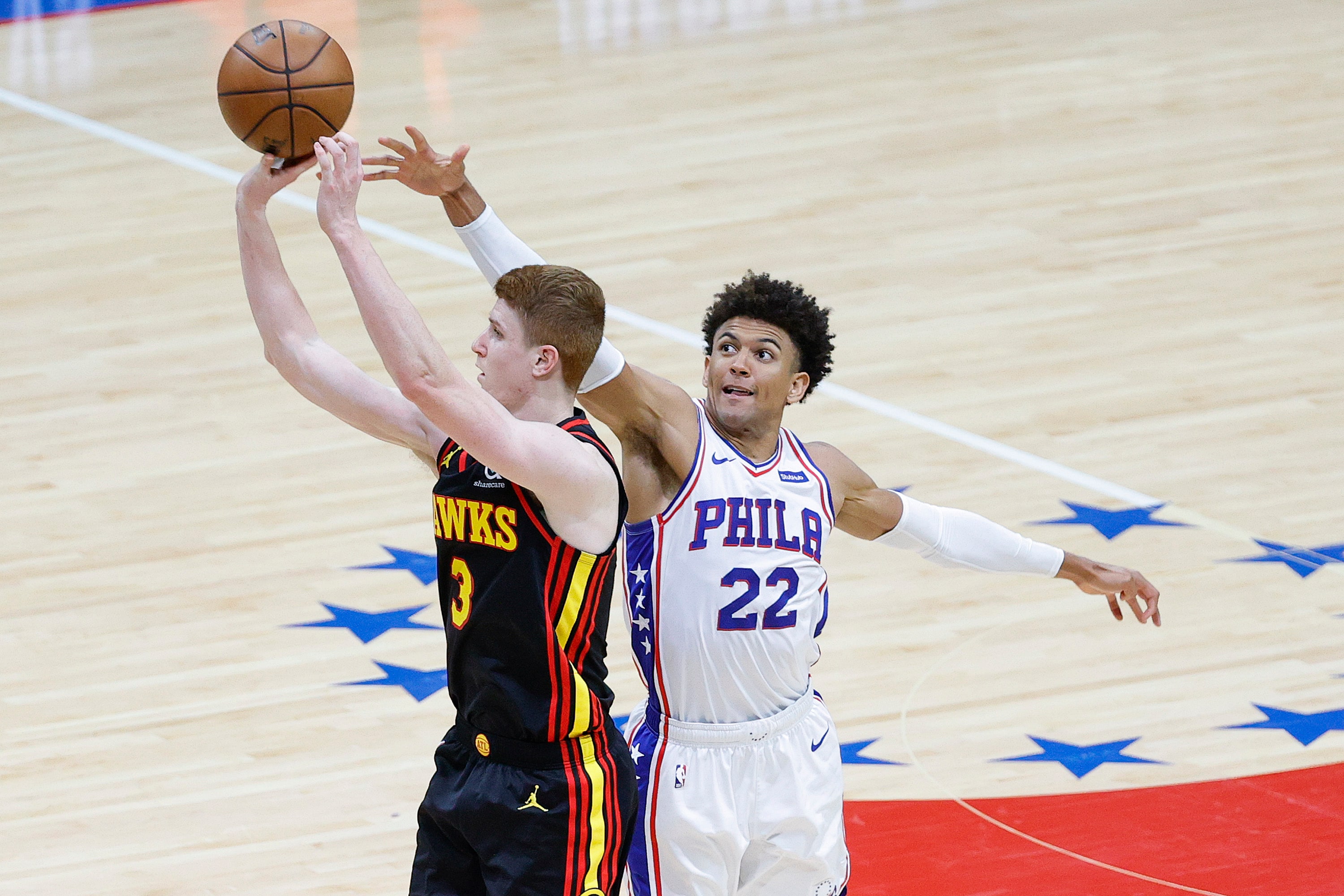
“In a lot of ways, I saw the full spectrum of what the NBA can offer,” Huerter said. “That front office, they were patient with us and really gave us two years to lose. I learned what a lot of losing feels like … That third year, I learned what winning and playing at a really high level feels like; not being able to make the Finals but coming really close, seeing what it takes to get there. Obviously I’m trying to bring that experience here.”
His old Hawks and new Kings teams, Huerter says, share plenty of unmistakable similarities.
“[Sacramento is] a place that’s looking to win, that hasn’t won in a little while, and I’m kind of coming at the same point [as in Atlanta],” he said. “We have a lot of guys who are super young, who haven’t been to the playoffs yet, mixed with guys who have.
“Obviously we’re trying to figure out ways to win. We’re going really hard at each other in practice, having long film sessions. It’s still a learning experience. I think with any group, you have to learn how to win together. Winning in this league is really tough to do. You can have a lot of talent, you can love the way you’re playing, but at the end of the day, you’ve got to figure out how to win games.”
A spike in three-point shooting and an uptick in tempo have infused the Kings with energy and excitement, culminating in wins in three of their last five contests.
Huerter — now known as “K-9” in the locker room, “Headband Huerter” by the fanbase, and a bucket-getter by opponents who’ve learned to respect his game — has scored at least 20 points in four of his first nine games with his new team.
He’s been encouraged by and recognizes the importance of a positive stretch highlighted by multiple comebacks from double-digits deficits.
“For teams like us that are trying to flip that page and turn the corner,” Huerter said, “those are the types of wins you need over the course of a long season.
“I want to make the playoffs here, figure out how to change the culture in Sacramento. Just from being there, the city and the people really want to win. I know they’re behind us. Any way we can figure out how to get over .500 and continue to win, that’s what I’m trying to do.”