July 13, 2016, Las Vegas, NV – Back in the 80s when the NBA was ruled by the Showtime Lakers, they were coached by Pat Riley. He had the cool-as-Southern California look: the slicked-back hair, the perfectly tailored suits framing custom dress shirts with distinctive cutaway collars and fastidiously knotted ties.
With a roster featuring Kareem Abdul-Jabbar, Magic Johnson, Byron Scott and Michael Cooper, it was presumed by most fans that it simply fell to Riley to roll the ball out to his superstars and then get the hell out of the way and model his Armani on the sidelines.
But that would be to dramatically shortchange Riley’s contribution to the game of basketball. After one particularly disappointing playoff series, Riley set about knocking out walls and building an area in his house in which he could do nothing but watch video and figure out what had gone wrong. Riley took the concept of video to an ever-higher standard, using game clips to not only point out shortcomings and areas of improvement to players, but also to motivate them.
Riley might also be one of the founders of the analytics movement in the NBA. Following the 1986 season, Riley developed a program that he called the Career Best Effort (CBE). His goal was to assign a quantifiable score to a number of categories and thus create a statistical portrait of the player when he joined the Lakers.
Jackie MacMullen described it thusly in her book When the Game Was Ours:
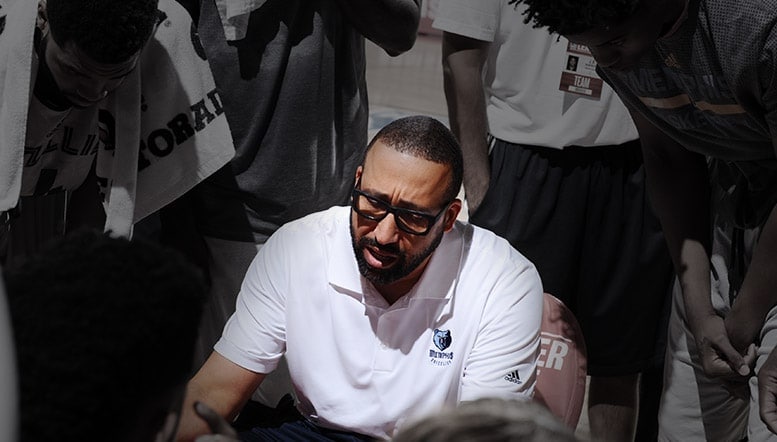
Push ahead thirty years and you’ll see David Fizdale standing in the middle of a high school gym in Las Vegas, urging his players to improve “one percent.”
“I’m so thrilled for him to have this opportunity,” says current Heat coach Erik Spoelstra during a recent interview. “He’s a first class individual. This business is tough and when you come across somebody that you can really trust, that is not only competent – that's a different bucket – but somebody who has great character, great integrity,” continues Spoelstra. “It’s not just coming from me or anyone from the Heat. If you ask anyone who knows him around the league, that’s what they talk about.”
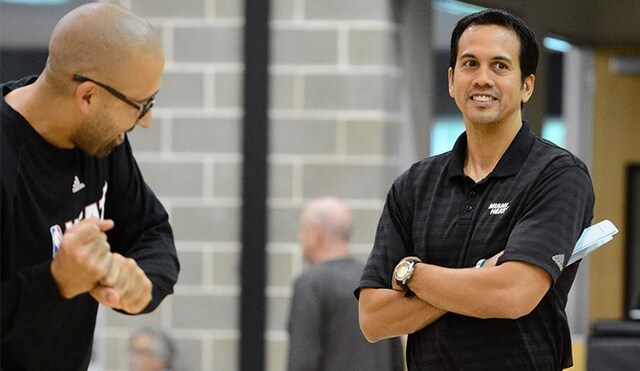
The bond of friendship is strong between Fizdale and Spoelstra. In fact, Spoelstra is now coming to grips that for the first time, he’ll have to coach an NBA game without one of his dearest friends on the staff.
Their friendship derives in part from parallel histories: small-college point guards who weren’t good enough to play in the NBA, but through grit and hard work, caught the attention of one of the game’s legends – Pat Riley.
Riley’s razor-sharp appearance on the Laker sidelines was no mere affectation. It was a reflection of who he was and how he ran the Lakers. Practices were organized and efficient with little wasted motion. No detail was too small to escape his notice.
And when Riley came to Miami, he brought his devotion to video. Just prior to Riley’s appointment, Heat GM Dave Wohl had hired Spoelstra as the team’s video coordinator. Riley recognized Spoelstra’s work ethic – and let’s remember that Spoelstra was the video coordinator before the advent of NBA League Pass and when a video room was stacked floor to ceiling with VHS tape machines and computer-based editing was years in the future. Putting together edits was a tedious and time-consuming effort.
“Video guys around the league are the grunts, so you really learn early on how to put in a twenty-hour day,” recounts Spoelstra. “You get all the reps, all the information, all the preps, all the hours. You really learn the pro game very quickly when you’re working in the video room.”
After a couple of years, Spoelstra went from grinding out pick and roll edits on Heat opponents to scouting opponents in person and filing detailed scouting reports. When Riley handed Spoelstra the reins of the Heat, the Hall of Fame coach pointed out that, "This game is now about younger coaches who are technologically skilled, innovative, and bring fresh new ideas.”
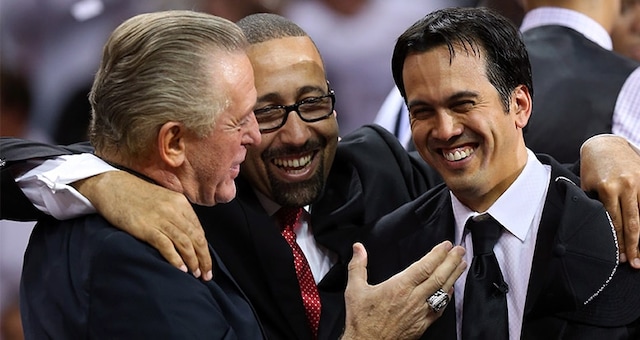
And the guy who hired David Fizdale to do the job that he once did? Erik Spoelstra. Spoelstra saw in Fizdale the same qualities that Riley had seen in Spoelstra:
Part of that schooling for Fizdale took place during three previous NBA stops, but perhaps it’s his experience at the Heat’s video coordinator that gave him the most valuable insight into being an NBA head coach.
“When you’re the video coordinator, you’re probably the second-closest person to the head coach,” according to Spoelstra. “I would say the majority of coaches in this league, the person sitting next to them on the plane is the video coordinator.
First it was Spoelstra stepping into the position after working with Riley in Miami and now the wheel turns as Fizdale takes on a team after learning from Spoelstra. Now that Fizdale has stepped into the Grizzlies coaching job, you can already see that he has command of the gym. He has a plan: introduce a concept, reinforce it, practice it and then stack another concept on top. Don’t oversaturate young minds with too much information. Give them just enough to become proficient and then add on to that.
He’s also demanding accountability. Fizdale won’t hesitate to step in and correct a mistake. And when he corrects, he’s not yelling from the sidelines. He’s on the court, making eye contact with the offending player and demonstrating exactly what went wrong. He has the gift of being firm in his chastisement while demonstrating that he cares about his players as people.
And he demands that Riley-esque “one percent” improvement.
Follow Grizzlies TV Play-By-Play Announcer, Pete Pranica on Twitter @petepranica and on Instagram @petepranica. Stay tuned as Pete shares his perspective on the Grizzlies' performance at 2016 NBA Summer League in Las Vegas right here on Grizzlies.com.
Check out Grizzlies Summer League Central for more exclusive stories.